

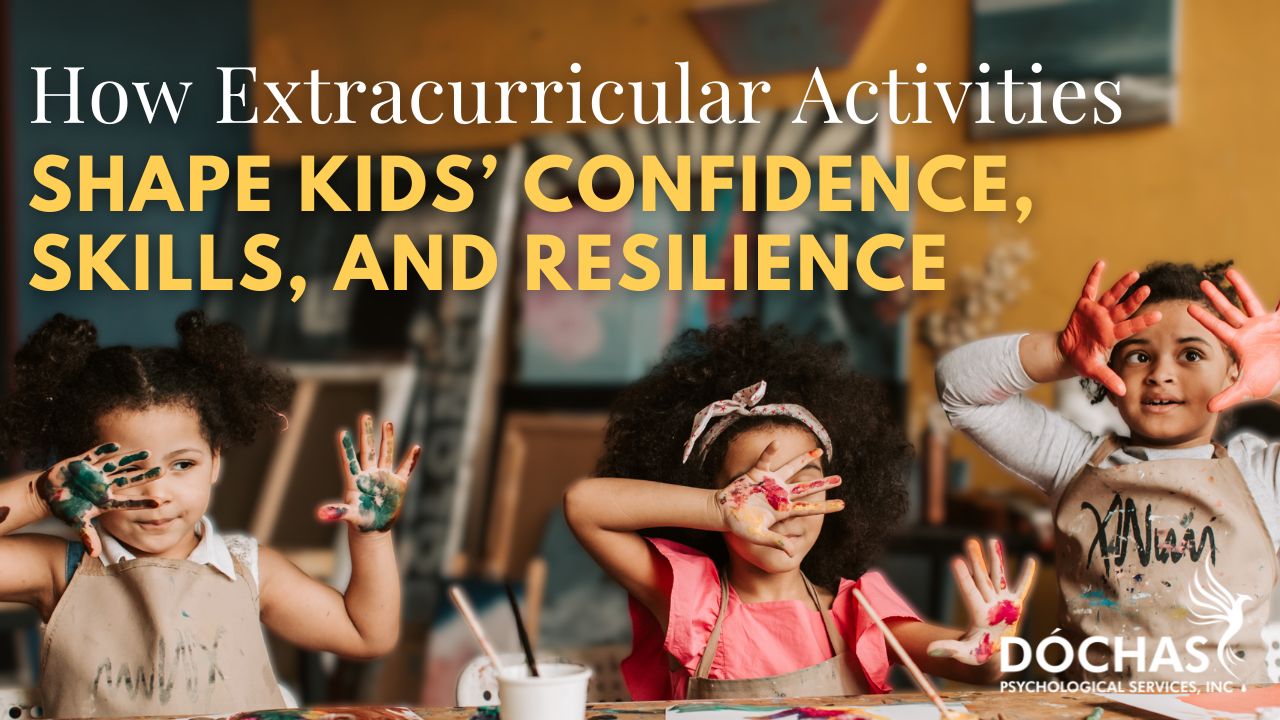
Hi again, Brittany here on the Dóchas Blog to talk with you about the importance of extracurricular activities for young minds.
Outside-school activities can have a huge impact on your child’s growth, and you play an important role in helping them get the most out of these experiences. Sports, music, volunteering, and other activities help children develop social skills, build confidence, and support their mental and emotional wellbeing.
At the same time, it’s important to help children maintain balance between activities and downtime. Too much pressure or over-scheduling can lead to stress, burnout, and lower self-esteem, while too little involvement can limit opportunities to connect with others and develop new skills.
Watch my video or keep reading to learn how extracurricular activities support children’s growth – and how you can make sure they enjoy them without feeling overwhelmed.
Boosting Confidence with Extracurricular Activities
One of the biggest benefits of extracurricular activities is the boost in self-confidence your child can gain. When you support them in building new skills or developing a talent outside school, you help them feel pride and a sense of accomplishment. Scoring goals, performing in a play, or mastering a piece of music gives your child tangible markers of success. These activities give them opportunities to shine, succeed in different contexts, and build a positive self-image.
Building Social Skills Through Extracurriculars
Extracurricular activities give your child a chance to interact with peers in ways they might not experience in the classroom. When you encourage them to join group activities, like team sports or clubs, you help them develop important social skills, including communication, collaboration, and empathy. You also help them meet new friends and expand their social circle. These experiences help them strengthen emotional intelligence, improve conflict-resolution skills, and develop a strong sense of belonging.
Reducing Stress and Improving Emotional Regulation Using Extracurricular Activities
Extracurriculars can provide your child with a much-needed outlet for stress. Like adults, your child experiences pressure – from academics, peers, and expectations. When you encourage them to engage in physical activities like sports, or creative outlets, like painting or playing music, you help them calm both mind and body. These extracurricular activities also help them develop emotional regulation. Learning to cope with victories and defeats, or using art to express feelings, allows them to manage and express emotions in a healthy way.
Building Responsibility Through Extracurriculars
Participating in extracurricular activities helps your child develop time management skills. By guiding them as they balance practice schedules, homework, and other commitments, they learn to prioritise responsibilities – an essential life skill nurtured through extracurricular activities.
Cultivating a Growth Mindset with Extracurricular Activities

Arianna Huffington once said, “Failure is not the opposite of success; it’s part of success.” When you encourage your child to participate in extracurricular activities, you give them many opportunities to learn from mistakes. These activities help them develop resilience and a growth mindset – the belief that their abilities and intelligence can grow through effort and perseverance. When you talk with them, you can highlight the power of “yet,” encouraging them to add it to the end of statements like, “I can’t…yet.” Adopting this mindset is crucial for their long-term success, promoting a healthy approach to setbacks and challenges. It also nurtures hope, helping them feel capable of growth and progress.
Striking the Perfect Balance
While extracurricular activities offer clear mental and developmental benefits, it’s important for you to help your child find the right balance. Too many activities can lead to burnout, increased stress, and overwhelm, while too few may mean missed opportunities for skill-building and social connection.

Signs of Extracurricular Imbalance:
Too many extracurriculars: Your child may feel exhausted, anxious, or miss out on family time and other important activities. A lack of downtime can heighten their feelings of frustration.
Too few extracurriculars: Your child might miss opportunities to develop social skills and explore new interests.
How to Strike the Right Balance:
- Pay attention to your child’s interests and involve them in decisions about their activities.
- Set priorities and focus on extracurricular activities that are most beneficial to their development – quality over quantity.
- Allow for downtime, ensuring rest, play and family activities have a place in your child’s schedule.
- Adjust as needed! Your child’s interests and needs change over time, and extracurricular commitments should too.
Balanced Extracurriculars, Lasting Growth

Extracurricular activities can offer your child a wide range of benefits. From boosting confidence and social skills to supporting stress management and essential life skills, these activities play an important role in their development. The key, however, is balance. Being mindful of the number and type of activities will help your child enjoy the rewards without the negative effects of over-scheduling.
With the right balance, extracurricular activities can inspire growth, confidence, and joy, helping your child thrive inside and outside the classroom.
If you’re looking for support in helping your child, find the right balance and get the most out of extracurricular activities, feel free to reach out to Dóchas at 780-446-0300 or info@dochaspsych.com. Book an in-person (Spruce Grove) or virtual (across Alberta) appointment with one of our therapists here. Book a FREE 15-minute meet & greet with Brittany here.
References
Simpkins, S. D., Vest, A. E., Dawes, N. P., & Neumann, M. J. (2010). Dynamic relations between parental behaviors and children’s motivational beliefs in sports and music. Parenting: Science and Practice, 10(1), 97–118. https://doi.org/10.1080/15295190903014642
Schaefer, D. R., & Simpkins, S. D. (2014). Using social network analysis to clarify the role of obesity in adolescent friendships. Child Development Perspectives, 8(1), 23–28. https://doi.org/10.1111/cdep.12052
Oberle, E., Ji, X. R., Guhn, M., Schonert-Reichl, K. A., & Gadermann, A. M. (2019). Benefits of extracurricular participation in early adolescence: Associations with peer belonging and mental health. Journal of Youth and Adolescence, 48(11), 2255–2270. https://doi.org/10.1007/s10964-019-01062-4
Eccles, J. S., & Barber, B. L. (1999). Student council, volunteering, basketball, or marching band: What kind of extracurricular involvement matters? Journal of Adolescent Research, 14(1), 10–43. https://doi.org/10.1177/0743558499141003
Fredricks, J. A., & Eccles, J. S. (2006). Is extracurricular participation associated with beneficial outcomes? Concurrent and longitudinal relations. Developmental Psychology, 42(4), 698–713. https://doi.org/10.1037/0012-1649.42.4.698
About Dóchas Psychological
Dóchas Psychological Services is a well-established and trusted therapy clinic located in Spruce Grove, Alberta. At Dóchas we value the idea that everyone deserves a safe space. Through connection and education, our team works hard to build a trustworthy relationship with each of our clients. It is our goal to create a community for our clients to feel like they belong.
Disclaimer
Information provided through Dóchas Psychological Services blogs or vlogs is meant for educational purposes only. They are NOT medical or mental health advice. You can read more about our disclaimer here.