

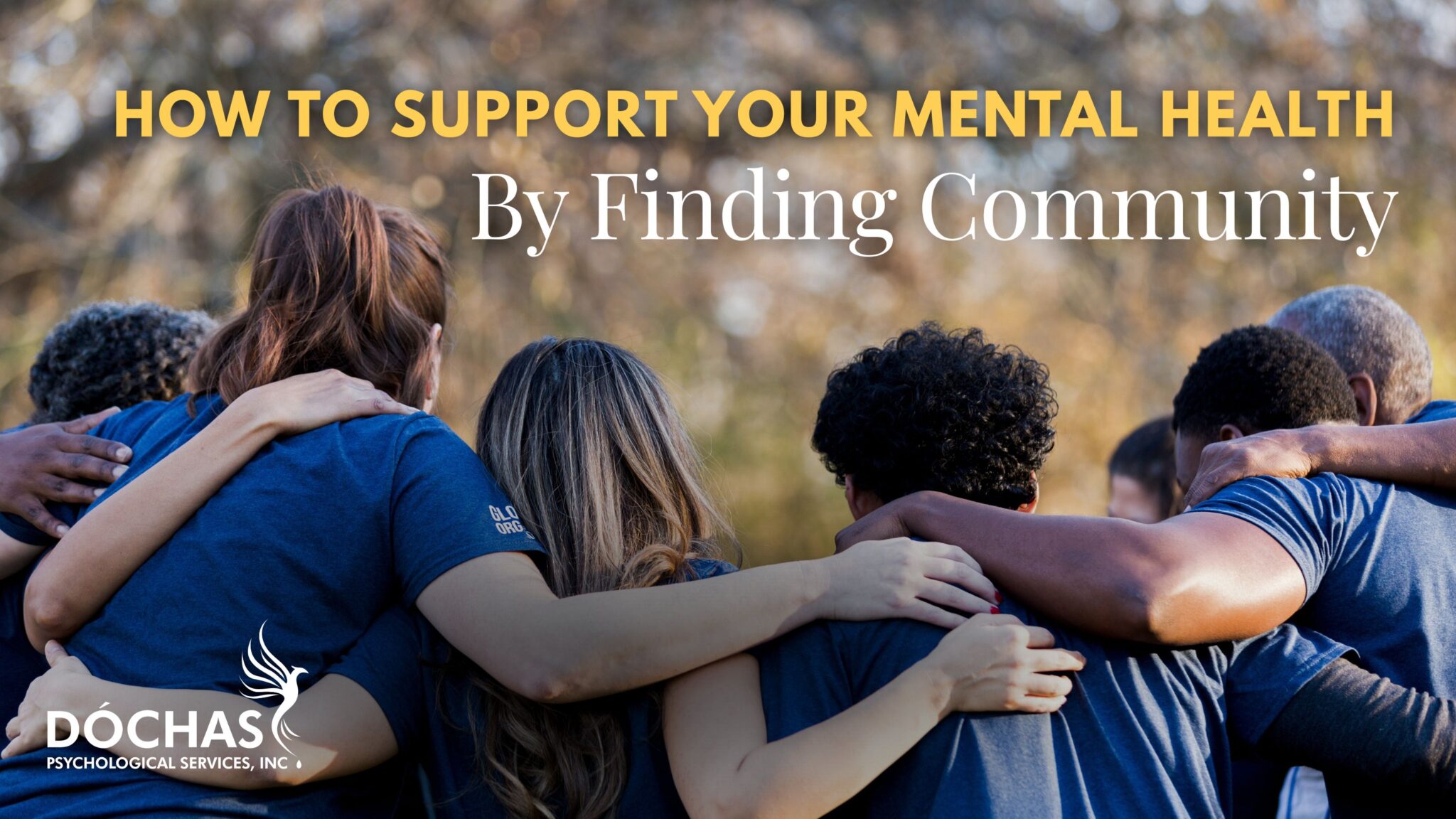
What Does it Mean to Have a “Sense of Community”?
Feeling a sense of community means knowing you belong and that people around you have your back. It’s that feeling of connection you get when you know you’re supported by others and can support others in return.
Think about a time you clicked with a great group of coworkers, had friendly, reliable neighbours, or were part of a team that worked really well together. That can be what a community feels like.
How Does a Community Form?

Communities can form in all kinds of ways.
Sometimes it’s about where you live (like your neighbourhood), shared interests (like a gardening club or an art class), everyday activities (like your workplace), online groups (like a creative accountability club) or common experiences and identities (like the 2SLGBTQ+ community).
No matter how they’re formed, communities can help you feel seen, supported, and less alone. They remind you that you’re part of something bigger and that you don’t have to navigate life on your own.
How Does Community Improve Mental Wellbeing?
What does community have to do with mental health?
Think about a time when you (or someone you know) felt lonely or unsupported. How did that feel? Now compare that to a time when you felt truly supported by the people around you. Chances are, you felt more energized, confident, and steady when you had a sense of community.
Research backs this up: feeling part of a community is strongly linked to better mental health (Palis, H., Marchand, K., & Oviedo-Joekes, E. (2020)).
Community can be a powerful source of support and healing for everyone, including people with ADHD, anxiety, or depression, as well as those navigating big life changes like a breakup, a new relationship, health challenges, or aging.
In short, a sense of community is an important part of staying mentally well! Building and leaning on community can make a real difference in how you cope, grow, heal, and feel day to day.
Do Introverts Need Community Too?

Everyone benefits from having a sense of community.
However, how a community is accessed is different for everyone. Extroverts might feel energized and supported by big, busy, and active communities, whereas introverts might prefer smaller, more intimate communities. A community of two can be just as powerful as a community of two hundred.
What counts most is the quality of connection and whether you feel comfortable, supported, and able to connect in a way that feels right for you!
How Can I Build Community?
Building community is simpler than you might think! Here are 3 ways to get started.
1. Get clear on your interests and the opportunities available to you.
Consider opportunities such as:
- Joining a sports team or club
- Volunteering
- Trying new hobbies in a group setting
- Attending community events
- Hosting a block party
- Starting a garden-sharing group
- Joining a book club
2. Be a good villager.
Commit to being an active community member! We all want a village, but you have to remember to be a good villager as well.
Showing up, helping out, and staying mindful of your own boundaries can boost your mental health just as much as receiving support. Being there for others strengthens your connections and helps you feel more grounded and fulfilled!
3. Remember that you deserve to belong.
Everyone deserves to feel a sense of community.
No matter who you are or what you’ve been through, you deserve to feel supported, cared for, and connected to others. Finding those connections, or rebuilding them, can make a meaningful difference in how you feel day-to-day.
At Dóchas Psychological, we believe that therapy should be accessible to everyone. Therapy can help you understand what’s holding you back and build the skills to find and nurture healthy connections. Our team offers a wide range of therapeutic approaches, from talk therapy and CBT to somatic work and EMDR, so that no matter where you’re starting, there’s a path forward that fits you.